

Costs Associated with Repairs
Common Causes of Roof Leaks
- Storm Damage: High winds and heavy rain may damage roofing materials and cause leaks.
- Wear and Tear: Aging materials deteriorate and become more leak-prone.
- Clogged Gutters: Blocked gutters allow water to back up and infiltrate the roof structure.
- Missing or Damaged Shingles: Cracked, missing, or poorly installed shingles permit water penetration.
- Faulty Flashing and Pipe Boots: Improperly sealed or damaged flashing and pipe boots around chimneys, vents, and skylights are frequent leak points.
How Houston Weather Affects Leak Risks
Roofing Materials Prone to Leaks
- Flat Roofs: Water accumulation due to poor drainage leads to leaks.
- Older Asphalt Shingles: Aging shingles become brittle and lose protective granules, increasing leak probability.
- Improper Drainage Systems: Ineffective drainage causes water pooling damaging roof structure.
Systematic Leaky Roof Diagnosis Techniques
- Start with Interior Inspection: Check ceilings, walls, and attic for water stains, mold, or dampness.
- Visual Roof Inspection: Look for damaged, missing, or curled shingles, and check for sagging spots or granule loss.
- Inspect Flashing and Pipe Boots: Examine seals around chimneys, vents, skylights, and pipes for cracks, gaps, or deterioration.
- Examine Gutters and Downspouts: Ensure they are clean and direct water away effectively.
- Use Water Testing: Simulate rain with a garden hose to detect leak points while checking the interior.
Fast Step-by-Step Roof Leak Repair Protocols
- Safety First: Use proper safety gear and stable ladders.
- Remove Damaged Materials: Carefully take off broken shingles or deteriorated flashing.
- Clean Repair Area: Clear debris to ensure proper adhesion.
- Seal Flashing and Pipe Boots: Apply roofing cement or high-quality sealant to cracks or gaps.
- Replace Shingles or Roofing Material: Install matching materials securely with nails or adhesives.
- Restore Gutters if Needed: Clear blockages or repair damaged sections to improve drainage.
- Conduct a Water Test: Confirm the repair stops leaks before finishing up.
Flashing and Pipe Boot Troubleshooting
- Look for Rust or Corrosion on metal flashing which weakens seal.
- Check for Lifting or Gaps where water can seep in.
- Inspect Pipe Boots for cracks or hardened rubber seals.
- Apply Roofing Cement or Replace Components if flashing or boots are damaged beyond repair.
Signs of Roof Damage Indicating a Leak
- Water Stains: Discolored spots on ceilings or walls.
- Mold or Mildew Growth: Indicates prolonged moisture intrusion.
- Missing or Damaged Shingles: Exposes underlayers to water.
- Sagging Roofing Areas: May signal structural damage from water.
- Granules in Gutters: Suggests shingle erosion.
How to Inspect Your Roof for Symptoms
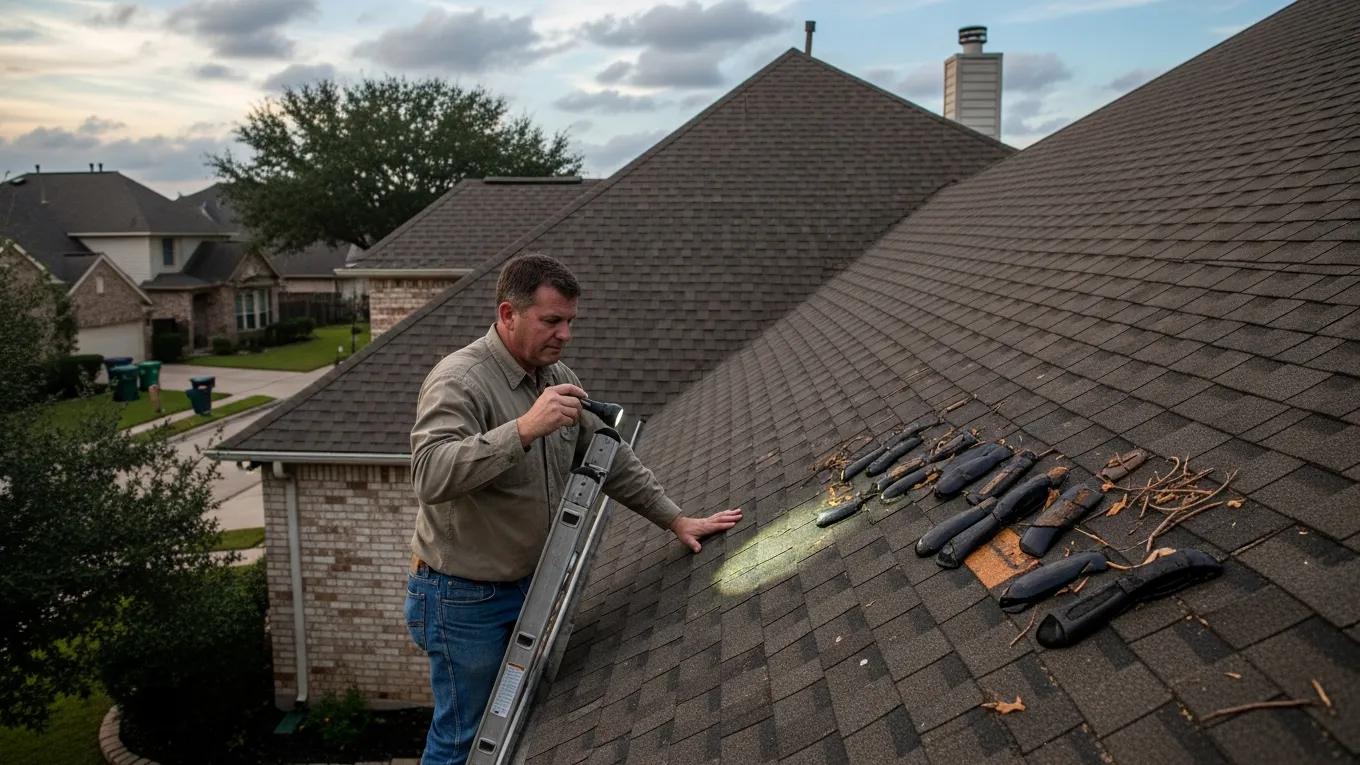
- Ensure Safety: Use secure ladders and footwear; consider professional help for steep roofs.
- Check for Visible Damage: Missing shingles, cracked flashing, or debris.
- Inspect Attic: Look for moisture, stains, or mold.
- Examine Gutters: Clear blockages and look for roofing granules or leaves.
- Test with Water: Simulate rain to pinpoint active leaks.
When to Call a Licensed Houston Professional
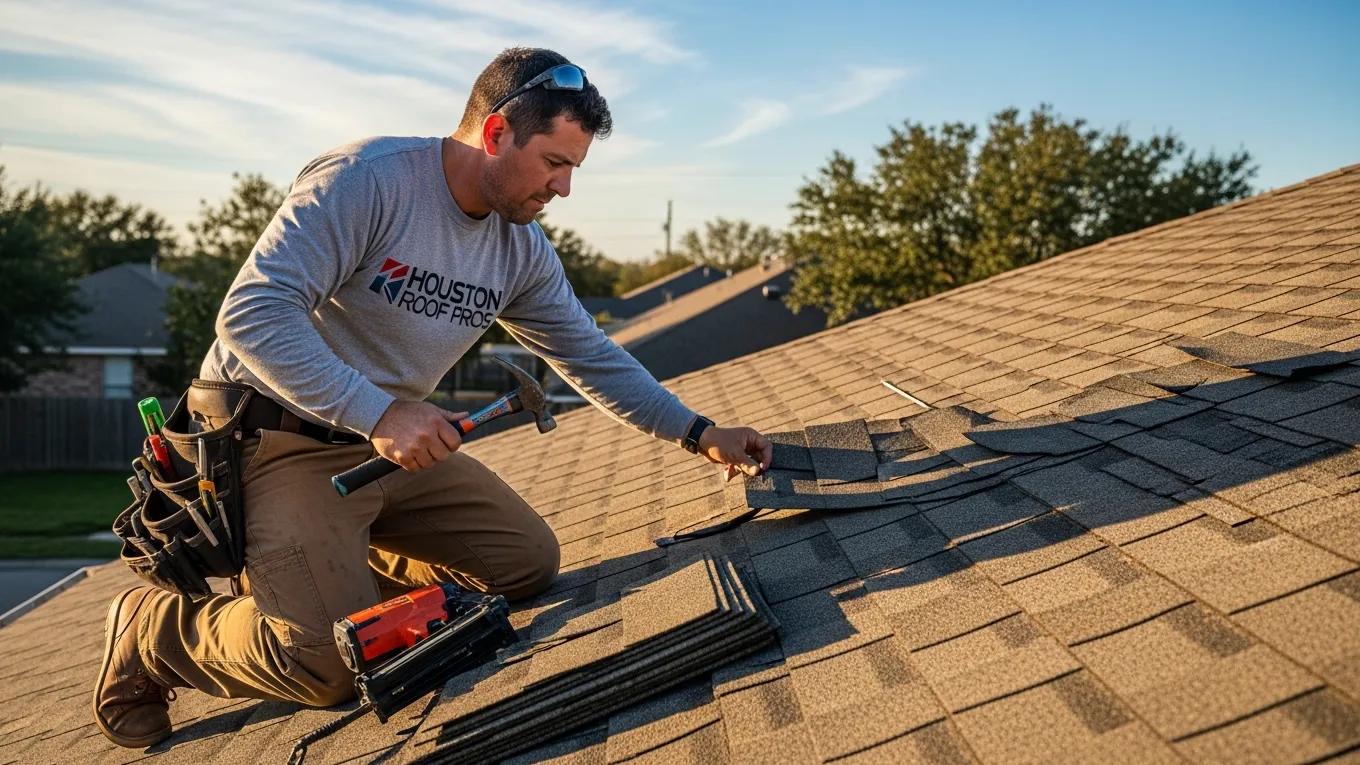
- Extensive Damage: Visible sagging, widespread missing shingles, or large water stains.
- Complicated Leak Sources: When the leak involves flashing, pipe boots, chimney areas, or multi-layer roofing systems.
- Safety Concerns: Steep or high roofs where DIY work risks injury.
- Post-Severe Weather: After storms or hail to check for hidden damage.
- Uncertainty: If unsure about diagnosis or repair approach.
Emergency Measures for a Leaking Roof
- Cover Leaks with Tarps: Securely cover affected areas to block water entry.
- Use Buckets: Catch dripping water to prevent interior damage.
- Move Valuables: Protect furniture and belongings from water exposure.