
My Website

Roof age is a key factor: repairs suit roofs under 15 years old with isolated damage. Replacement is necessary for roofs over 15 years or with significant damage. Roof Fix Houston's 100-person team offers free AI-powered inspections at 281-841-2504 to determine which path fits your home.

Houston homeowners should weigh roof age. Damage extent before deciding: roofs under 15 years with isolated issues typically need only repair. Most roofs—rated for 20 to 25 years nationally per Rutgers—require full replacement once Houston's extreme heat and storms accelerate wear beyond that threshold. Roof Fix Houston offers free inspections to guide this decision.

What Is the Houston Roof Repair vs Replacement Decision?

Houston homeowners face a choice every roofing contractor recognizes: fix the damage or replace the whole system. Houston roof replacement vs repair hinges on more than a leak or two. Extreme heat and heavy rain cause local roofs to wear out years before the national average lifespan. The decision carries more urgency here than in milder climates. Waiting too long often turns a manageable repair into a full-scale project.

A sound roof repair vs replacement decision guide rests on three factors: roof age, the extent of visible damage, and whether an insurance claim applies. Age matters because materials degrade under sustained UV exposure and humidity. Damage extent matters because scattered wear differs from structural compromise. Insurance involvement matters because claim timelines and coverage terms shape what repair or replacement actually costs the homeowner.

The roof itself serves one core function: protecting the home from Houston's volatile weather patterns. A compromised roof lets that protection erode, exposing framing, insulation, and interior spaces to moisture damage over time. That's why identifying signs you need a new roof Houston homeowners should watch for, granule loss, sagging, recurring leaks, becomes part of routine home maintenance rather than a one-time inspection.

How Urgent Is the Decision in Houston?
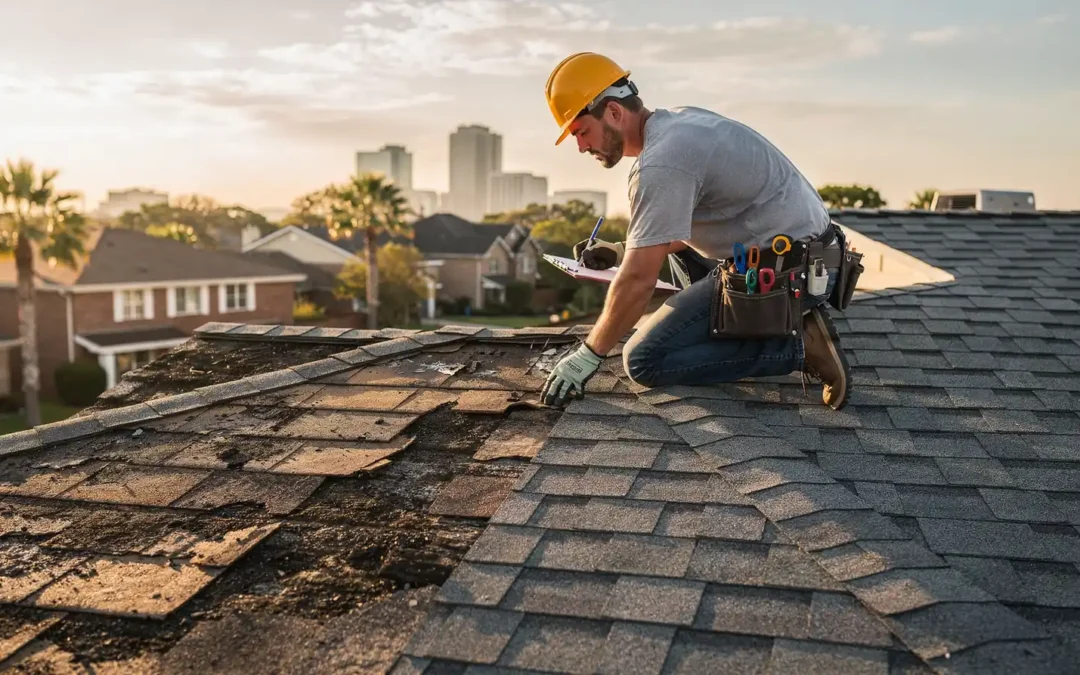
Delaying a roofing decision in Houston carries more risk than in cooler, drier regions. Heat and storm cycles accelerate material breakdown, so problems identified early tend to stay manageable. Addressing issues promptly protects both the home's safety and its long-term structural durability, limiting the chance that a small repair becomes an emergency replacement.

When Should You Repair Instead of Replace?

Repair remains the appropriate choice when a Houston roof is under 15 years old. Shows damage confined to one section. Age matters because materials degrade gradually under Gulf Coast heat and humidity. A younger roof still has structural life left to protect. A houston roof replacement vs repair decision hinges less on emotion. More on where the roof sits in its lifespan.

Isolated damage tells a different story than widespread deterioration. A cracked ridge cap, a few lifted shingles near a vent, or storm debris damage in one corner typically points to a targeted fix rather than a full tear-off. This is the foundation of any sound roof repair vs replacement decision guide: match the scope of the fix to the scope of the actual problem.

Can a small repair turn into a full inspection?

Yes. Crews dispatched for a limited shingle repair on a Houston home have, in practice, gone on to check the entire roof surface during that same visit. This approach catches secondary issues, like weakened flashing or granule loss elsewhere, before they force a return trip.

What tells a homeowner repair is still the right call?

Several conditions favor repair over full replacement:

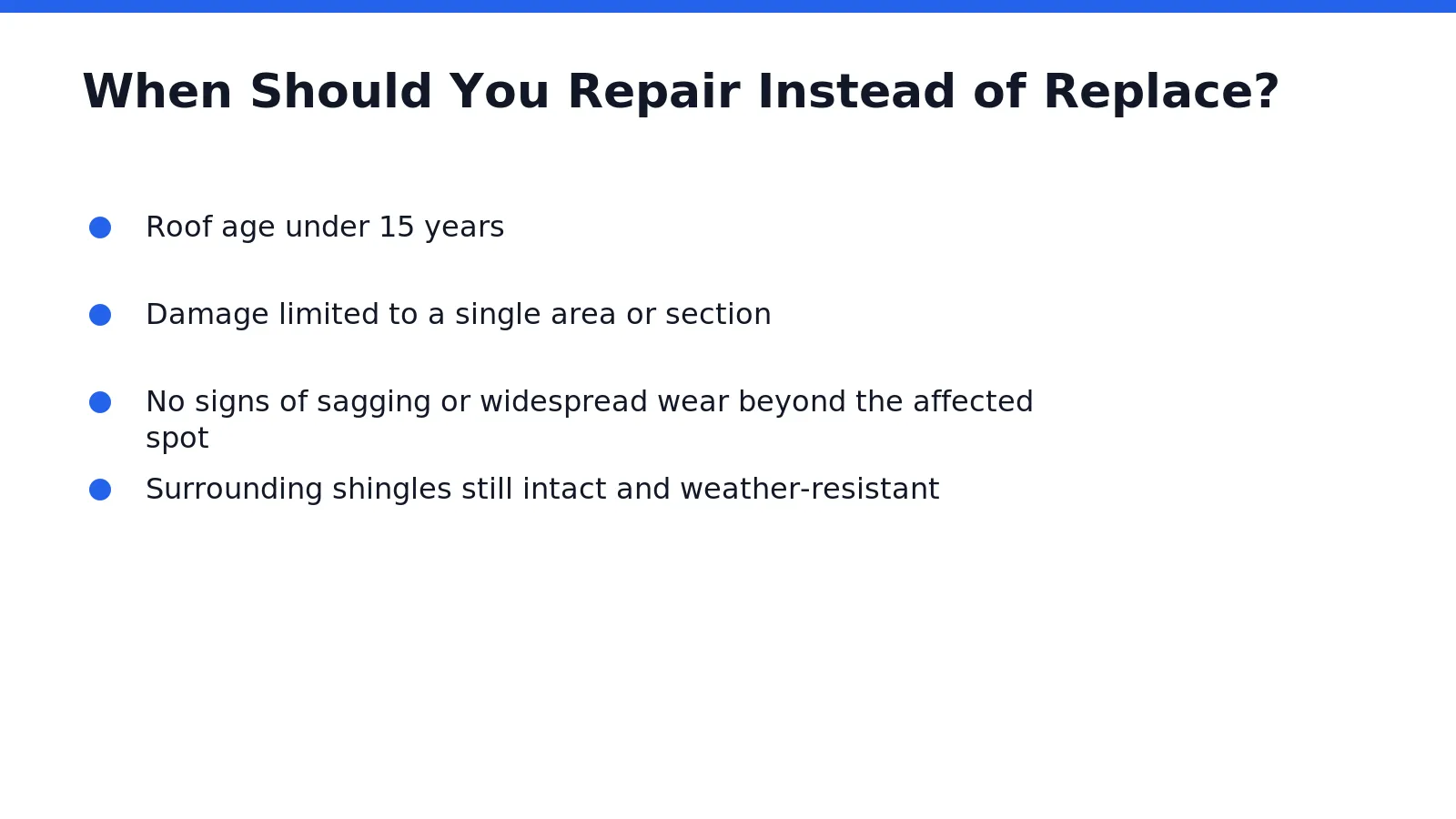
  • Roof age under 15 years
  • Damage limited to a single area or section
  • No signs of sagging or widespread wear beyond the affected spot
  • Surrounding shingles still intact and weather-resistant

When these conditions hold, a targeted repair addresses the immediate problem without the cost and disruption of a full roof replacement, keeping the existing roof's remaining service life intact.

When Is It Time to Replace Your Houston Roof?

Roof age marks the clearest signal for when to replace roof houston properties reach the end of their service life. Houston roofs generally fall into the replacement window between 15 and 30 years old, a range shaped by relentless UV exposure, humidity, and storm cycles across the region. Roofs past the 20-year mark typically need full replacement rather than another round of patch repairs. Continued repair on a roof this old often becomes a losing trade: materials weaken and fail again, even after fresh fixes.

Weighing a houston roof replacement vs repair decision starts with an honest look at roof age, then moves to condition. A young roof with isolated wear usually responds well to targeted repair work. An aging roof, especially one already past 20 years, rarely benefits from the same approach.

How does roof age affect the repair-or-replace decision?

Roof age Houston homeowners should track is the single biggest factor in how much longer a repair can realistically hold. Roofs between 15 and 30 years old sit in the zone where materials begin to fail structurally, not just cosmetically. Past 20 years, patching becomes a short-term fix on a system nearing full breakdown.

Roof AgeTypical Path
Under 15 yearsRepair
15–20 yearsCase-by-case evaluation
Over 20 yearsReplacement

A structured roof repair vs replacement decision guide treats age as the starting filter, then layers in damage extent and repair history. Among the clearest signs you need a new roof houston homeowners should track: a roof already exceeding 20 years combined with recurring repairs in the same areas. A new roof installation prevents costly repeat repairs, improves energy efficiency, and raises home value, particularly for properties facing Houston's intense heat and frequent storms.

What Signs Indicate You Need a New Roof?

Several visible warning signs point Houston homeowners toward replacement rather than repair. Damaged shingles, exposed decking, and cracked or curling roof materials often mark the clearest indicators that a section of roof has reached the end of its useful life. These physical signs form the foundation of any signs you need a new roof houston checklist. Visible deterioration rarely improves on its own.

Interior clues matter just as much as exterior ones. Water stains spreading across ceilings and walls, along with mold or mildew growth, signal moisture intrusion that has already breached the roofing system. Left unaddressed, this kind of damage spreads into insulation and framing, turning a contained issue into a structural one.

Material quality plays a direct role in how long a roof lasts. Certain roofing materials hold up longer than others under Houston's heat and humidity. Subpar products or poor installation create recurring problems years before their expected lifespan ends.

How do homeowners know if damage requires replacement instead of repair?

Scope matters more than any single symptom. Damage confined to one section usually justifies a targeted repair. Deterioration spread across multiple areas of the roof signals that replacement makes more financial sense. A houston roof replacement vs repair evaluation should always weigh how far the damage has traveled, not just how it looks in one spot.

A roof repair vs replacement decision guide typically includes the following checkpoints:

  • Extent of visible shingle or material damage
  • Presence of water stains, mold, or mildew indoors
  • Age and known quality of installed roofing materials
  • Whether damage is isolated or widespread

Determining when to replace roof houston properties require depends on a thorough inspection covering age, condition, and damage scope together, rather than any one factor alone.

How Do Houston Homeowners Get an Accurate Assessment?

Accuracy starts with a walk-through of the actual property, not a phone estimate or a generic price chart. A roof repair vs replacement decision guide built around real conditions on the roof, rather than assumptions about age alone, produces recommendations homeowners can trust. Local familiarity matters here. A roofing provider based in Houston, Texas brings direct, firsthand knowledge of the humidity, heat cycles, and storm patterns that wear down shingles faster than in milder climates. That grounding shapes how an inspector reads granule loss, flashing wear, and decking softness on a Houston roof.

Staffing capacity affects consistency, too. A workforce of 100 employees lets a company serve the Greater Houston Area without long wait times for inspections, even during peak storm season. Family-owned operations tend to frame these visits around honesty and integrity rather than volume-based sales targets, which matters when the outcome hinges on trust. Safety protocols also come into play: adherence to established safety guidelines protects the homeowner's property, the inspecting crew, and the household itself during every visit.

What should a written assessment actually include?

A reliable assessment includes a property-specific review paired with written documentation. That paper trail should control the final recommendation, scope of work, price, and any coverage details tied to the roof.

Homeowners comparing quotes should expect:

  • A documented condition report referencing specific roof sections, not general age estimates
  • Written scope and pricing tied to the property, not a apartment-rate estimate
  • Clear notes on materials affected and coverage implications

Verbal estimates without this documentation leave too much room for dispute later.

Conclusion

In closing, the decision between roof replacement and repair hinges on your property's specific condition, age, and long-term investment strategy. By evaluating structural integrity, damage extent, and remaining lifespan through a professional assessment, Houston homeowners gain the clarity necessary to protect their most significant asset. Whether repair suffices or replacement proves prudent, prioritizing timely action prevents compounding damage and ensures your roof performs reliably against the region's demanding climate conditions.

49 50 57