
My Website
/* Inline styles converted to CSS */
.metasync-inline-1 { border-collapse: collapse; }
.metasync-inline-2 { border: 1px solid rgb(193,193,193); padding: 6px; background-color: rgb(233,233,233); text-align: center; }
.metasync-inline-3 { border: 1px solid rgb(193,193,193); padding: 6px; background-color: rgb(233,233,233); text-align: center; }
.metasync-inline-4 { border: 1px solid rgb(193,193,193); padding: 6px; background-color: rgb(233,233,233); text-align: center; }
.metasync-inline-5 { border: 1px solid rgb(193,193,193); padding: 6px; }
.metasync-inline-6 { border: 1px solid rgb(193,193,193); padding: 6px; }
.metasync-inline-7 { border: 1px solid rgb(193,193,193); padding: 6px; }
.metasync-inline-8 { border: 1px solid rgb(193,193,193); padding: 6px; }
.metasync-inline-9 { border: 1px solid rgb(193,193,193); padding: 6px; }
.metasync-inline-10 { border: 1px solid rgb(193,193,193); padding: 6px; }
.metasync-inline-11 { border: 1px solid rgb(193,193,193); padding: 6px; }
.metasync-inline-12 { border: 1px solid rgb(193,193,193); padding: 6px; }
.metasync-inline-13 { border: 1px solid rgb(193,193,193); padding: 6px; }

Comprehensive Guide to Large Language Models: Applications, Implementation, and Ethical AI Practices

Large Language Models (LLMs) represent a significant advancement in artificial intelligence, enabling machines to understand, generate, and manipulate natural language with remarkable efficiency. This article will provide an in-depth look at what LLMs are, how they function, and their wide-ranging applications across various industries. The rapid evolution of generative AI technology presents both novel opportunities and challenges, making it essential for organizations to grasp these concepts thoroughly. As businesses increasingly rely on AI for efficiency and innovation, understanding the underlying mechanisms of LLMs, along with their ethical implications, will be crucial for driving responsible adoption. In this guide, we will cover the architecture of LLMs, their key applications, implementation strategies, synthesis methods, ethical considerations, and post-deployment monitoring practices.

To deepen the understanding of LLMs, this article references comprehensive studies that detail their development, capabilities, and diverse applications.

Understanding Large Language Models: Development, Capabilities, and Applications

ABSTRACT: Knowledge and Information Systems; LondonVol. 67, Iss. 3,(Mar 2025): 2967-3022.DOI:10.1007/s10115-024-02310-4 Large language models: a survey of their development, capabilities, and applications, 2025

What Are Large Language Models and How Do They Work?

Large Language Models are AI systems designed to process and generate human language based on vast datasets. They rely on complex architectures, particularly transformer models, which revolutionize how machines understand context and semantics. At the core of these models lies natural language processing (NLP), a field that equips AI with the ability to interpret and produce text as humans do. By leveraging large amounts of textual data, LLMs learn patterns, relationships, and structures inherent in language, allowing them to produce coherent and contextually relevant text.

Which key architectures define current LLMs, including transformers?

The foundational architecture of most modern LLMs is the transformer model, which utilizes self-attention mechanisms to weigh the significance of different words within a given context. This attention-based approach enables the model to understand nuances and contextual relationships better than previous sequential models. Architectures like GPT (Generative Pre-trained Transformer) and BERT (Bidirectional Encoder Representations from Transformers) have set benchmarks in NLP by improving the accuracy of various language processing tasks. The transition from RNNs (Recurrent Neural Networks) to transformers represents a paradigm shift in AI design, significantly enhancing processing capabilities and performance.

How does natural language processing enable AI text generation?

Natural Language Processing serves as the backbone of LLMs, allowing them to process human language accurately and generate text that reflects natural communication patterns. By employing techniques such as tokenization, semantic analysis, and context recognition, NLP equips LLMs to break down and comprehend intricate phrases and idioms. This understanding is pivotal for generating text that appears human-like, as it involves drawing upon learned knowledge from training datasets. The result is a dynamic and responsive interaction model capable of engaging users in meaningful ways.

What Are the Main Applications of Large Language Models Today?
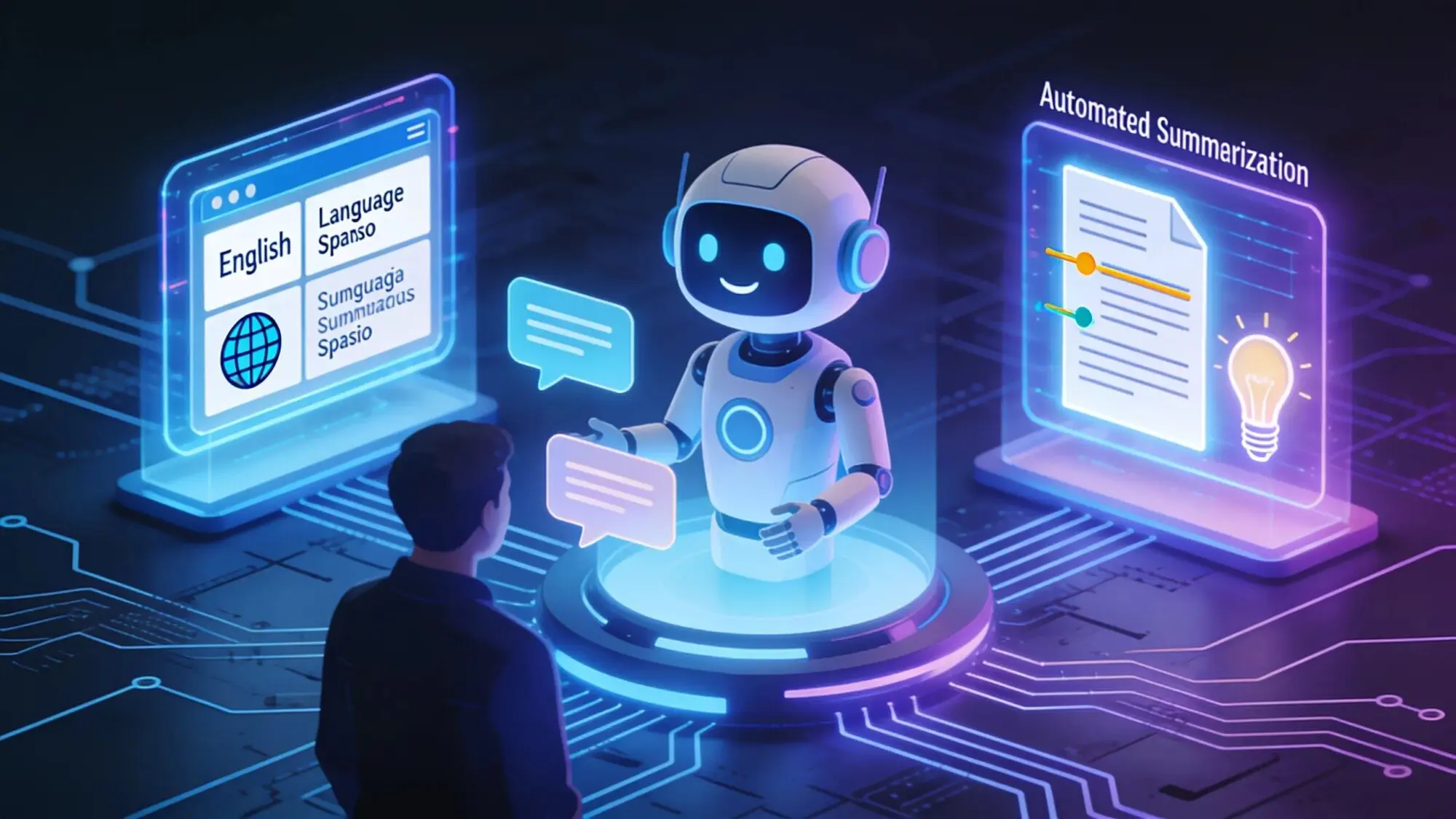
LLMs have found extensive applications across various sectors, transforming how businesses interact with customers and process information. Their capabilities extend beyond simple text generation to include complex tasks suchs as chatbots, summarization, and translation. The versatility of these models allows businesses to automate customer interactions, streamline content creation, and facilitate multilingual communications effectively.

How do LLMs power chatbots, summarization, and translation tasks?

LLMs enhance chatbots by providing them with the ability to understand user intents and generate contextually appropriate responses, resulting in more satisfying and efficient customer interactions. For instance, chatbots built on LLM frameworks can provide customer support, answer queries, and deliver personalized recommendations based on user data. In the realm of summarization, LLMs can condense large volumes of text into concise formats while retaining critical information, making it easier for users to grasp essential points quickly. Moreover, their translation capabilities leverage contextual knowledge to produce translations that are not only accurate but also culturally relevant.

Which industries benefit most from generative AI software solutions?

Generative AI, fueled by LLMs, has broad implications for various industries. Healthcare utilizes LLMs for generating patient summaries, automating report writing, and even aiding in diagnostics through natural language interactions. In finance, companies employ LLMs for automating report generation, analyzing market trends, and enhancing customer service through AI-driven chat interfaces. The media and entertainment sectors benefit from LLMs in content creation and scriptwriting, generating creative ideas at an unprecedented scale.

The integration of LLMs in these industries illustrates their potential to boost efficiency, accuracy, and user satisfaction through automated workflows.

This organizational integration of generative AI is further supported by studies exploring its strategic applications, challenges, and adoption requirements.

Strategic Integration of Generative AI: Applications and Challenges

strategic implementations,challenges, and outcomes of generative AI applications in our understanding of how generative AI is reshaping business processes and organizational Strategic integration of generative AI in organizational settings: Applications, challenges, and adoption requirements, M Al-Kfairy, 2025

How to Implement Large Language Models: Step-by-Step Guide

Implementing LLMs effectively requires careful planning and execution, from data preparation to deployment. Each step must align with specific business goals, ensuring that the implementation meets organizational needs. A structured approach fosters the successful integration of LLMs into existing systems for maximum utility.

What are key steps to fine-tune and deploy LLMs effectively?

Fine-tuning LLMs involves adjusting pre-existing models based on specialized datasets relevant to specific business applications. This process may include curating training data, defining evaluation metrics, and implementing iterative testing to improve model performance. Essential tasks include data cleaning, which ensures the quality and relevance of the datasets used, and specifying performance benchmarks that reflect desired outcomes such as accuracy and response time.

Which tools and frameworks assist in building generative AI applications?

Several tools and frameworks have emerged to simplify the development of generative AI applications. Notable among them are TensorFlow, PyTorch, and Hugging Face, which offer extensive resources for model training and deployment. Each framework presents unique advantages; for example, TensorFlow excels in scalability, while Hugging Face provides user-friendly libraries specifically designed for NLP tasks. Evaluating these tools in the context of the specific needs of the project will guide developers in making informed choices.

FrameworkFeatureApplication
TensorFlowHigh scalabilityLarge scale applications
PyTorchDynamic computation graphResearch and experimentation
Hugging FacePre-trained model libraryRapid NLP development

This comparison highlights how different frameworks cater to various aspects of LLM development, empowering developers to choose the tools that best fit their requirements.

What AI Text Synthesis Methods Do LLMs Use?

Text synthesis methods employed by LLMs enhance their ability to produce coherent and contextually rich text. These methods integrate various linguistic principles and machine learning techniques that allow models to generate fluid and accurate language outputs.

How do transformer models enable contextual and coherent text generation?

Transformer models leverage attention mechanisms to manage dependencies across different words in a sentence effectively. This capability results in text generation that honors the context and syntactic structures of language. Additionally, transformer-based models incorporate a vast range of training data, providing them with the necessary context to produce nuanced text even within complex topics. This feature is essential for applications requiring real-time interactions, ensuring responses are both relevant and intelligible.

What are the latest advances in AI text generation techniques?

Recent advancements in AI text generation include the development of unsupervised and semi-supervised learning techniques. These approaches allow models to learn from unannotated data, reducing reliance on extensive labeled datasets. Furthermore, multi-modal models are now being explored, which integrate text with other forms of data, such as images and audio. This integration opens up avenues for creating more sophisticated and versatile AI systems.

What Ethical Considerations Are Critical in AI Language Generation?

As LLMs become pervasive, addressing ethical concerns related to their deployment is paramount. Issues such as bias, misrepresentation, and accountability must be at the forefront of discussions surrounding AI ethics. Organizations implementing LLM technology must navigate these complexities to promote responsible AI practices.

How can bias mitigation improve ethical AI deployments?

Bias mitigation strategies aim to minimize harmful biases in AI outputs, which can disproportionately affect marginalized groups. Techniques such as diversifying training datasets, implementing fairness algorithms, and ongoing monitoring of model outputs are essential to reducing bias. These strategies can enhance trust in AI systems and ensure that they serve diverse populations equitably.

Addressing bias in AI models is crucial, as highlighted by examinations of ethical AI practices and their role in mitigating data, algorithmic, and human-induced biases.

Ethical AI Practices: Addressing Bias in Machine Learning

of bias in AI, emphasizing the need for ethical AI practices to of bias—data bias, algorithmic bias, and human-induced bias—improvement and proactive measures from developers, Ethical AI: Addressing bias in machine learning models and software applications, 2022

What responsible AI practices govern generative AI and text synthesis?

Responsible AI practices advocate for transparency, accountability, and inclusivity in AI deployments. Organizations should establish clear guidelines that outline expectations regarding the use of AI technologies, helping to prevent misuse and unintentional harm. Establishing ethical review boards and involving diverse stakeholders in the development process can foster a culture of responsibility and collective oversight.

How Can You Monitor and Update Large Language Models Post-Deployment?

Understanding how to effectively monitor and update LLMs post-deployment is crucial for maintaining their performance and relevance. Continuous evaluation of model outputs against set benchmarks is essential for ensuring that AI systems adapt to new data and changing user needs.

Which KPIs track LLM performance, SERP ranking, and engagement?

Key Performance Indicators (KPIs) such as accuracy, response time, user engagement rates, and satisfaction scores play a vital role in assessing the effectiveness of LLMs. Regular analysis of these metrics provides insights into model performance and user interaction, informing necessary adjustments to enhance AI capabilities.

How do timely updates maintain semantic relevance and AI topical authority?

Regularly updating LLMs helps maintain their semantic relevance by incorporating the latest data and trends. These updates can prevent knowledge stagnation, ensuring that models remain accurate and responsive to evolving language use and contextual developments. Employing strategies such as continuous training and feedback loops can facilitate this process, allowing LLMs to stay at the forefront of AI advancements.